877-224-2434

QUICK FACTS: LUXURY BASEMENT FINISHING IN THE DC METRO AREA

  • Cost Per Square Foot: $150-$300+ (luxury level in MD/VA)
  • 1,000 sq ft Total: $150,000-$300,000
  • Typical Project: $167,000-$233,000 (includes 1-2 signature spaces)
  • Timeline: 12-20 weeks depending on custom features and lead times
  • Includes: Everything in Essential and Premium (free architectural floor plan, dedicated project manager, interior design support) plus expanded design collaboration for each signature space, smart home integration, and custom millwork throughout
  • ROI: 60-70% in DC metro area (requires finding buyers who value your specific features)

Important Note for DC Proper: If your home is in Washington, DC (not Maryland or Virginia suburbs), pricing and timelines differ significantly due to historic home considerations, logistics, site access, and more intensive permitting requirements. Learn more about DC historic home basement remodeling.

Luxury Basement Cost Summary at a Glance

Core Remodeling Work

Component Cost Range (1,000 sq ft) Notes
Core Remodeling Work
Framing, Insulation, Drywall and Ceiling Work, Electrical Work, HVAC Extensions, Finishing Carpentry, Painting, Permits and Inspections, Interior Design Support
$49,000-$55,000 Same quality foundation as Essential & Premium

Signature Spaces

Space Cost Range Notes
Luxury Home Theater $35,000-$100,000 Laser projection, reference audio, Fortress seating
Luxury Wine Cellar & Tasting Room $40,000-$150,000 Climate control, custom racking, glass enclosures
Luxury Wet Bar $35,000-$75,000 Custom millwork, Sub-Zero, kegerator
Wellness Center/Gym $20,000-$50,000+ Commercial equipment, sauna, recovery suite
Luxury Home Office $25,000-$75,000 Custom millwork, professional technology
Spa Bathroom $25,000-$50,000 Steam shower, heated floors, luxury fixtures

Luxury Upgrades Throughout

Upgrade Cost Range Notes
Custom Millwork Throughout $25,000-$75,000 Floor-to-ceiling built-ins, architectural details
Smart Home Integration $15,000-$40,000 Control4, Lutron, whole-home audio
Luxury Flooring $15,000-$30,000 Wide-plank hardwood, exotic woods, stone

Total Investment

Configuration Cost Range Notes
Entry Luxury (1,000 sq ft) $150,000-$185,000 Core + 1 signature space + luxury finishes
Full Luxury (1,000 sq ft) $185,000-$250,000 Core + 2 signature spaces + full integration
Ultra-Luxury (1,000 sq ft) $250,000-$300,000+ Core + 3+ signature spaces + exotic materials

View Our Complete List of Spaces
View Our Complete List of Features

Everything You Get with Essential and Premium, Plus More

Luxury basement finishing includes everything that makes our Essential and Premium process different from typical contractors:

  • Free architectural floor plan created by an expert project manager (yours to keep, even if you don't hire us)
  • Preconstruction meeting where your project manager and interior designer walk through your actual space after demo, and we literally draw your layout on the floor so you can see it come to life in real time
  • Dedicated project manager who handles all subcontractors, permits, and inspections, plus weekly schedule updates so you're never left wondering what's happening with your project
  • Interior design support from preconstruction through completion

With Luxury, the design process expands significantly. Each signature space,  whether it's a reference-quality home theater, climate-controlled wine cellar, wellness center with sauna and cold plunge, or custom wet bar—requires dedicated design sessions. Your interior designer coordinates custom millwork fabrication (8-12 week lead times), specialty equipment selection, smart home integration, and the architectural details that make luxury spaces feel cohesive rather than assembled.

You're also working with our network of specialty contractors: acoustic engineers for theaters, climate control specialists for wine cellars, commercial equipment vendors for gyms, and custom millworkers who understand luxury tolerances. Coordinating these specialists is where general contractors fail and where our experience matters most.

Frequently Asked Questions

Q: How much does luxury basement finishing cost in the DC metro area?

A: Luxury basement finishing costs $150-$300+ per square foot in Maryland and Northern Virginia. For a 1,000 square foot basement, expect to invest $150,000-$300,000, with most projects landing between $167,000-$233,000. Luxury includes everything you get with Essential and Premium—free architectural floor plan, dedicated project manager, interior design support from preconstruction through completion—plus expanded design collaboration for each signature space, smart home integration, custom millwork throughout, and finishes that rival the finest establishments in Bethesda or McLean.

Q: What's included in a $175,000 luxury basement?

A: For a 1,000 sq ft basement at $175/sq ft, you get the same quality core remodeling work as Essential and Premium ($49,000-$55,000), plus one major signature space (home theater, wine cellar, wellness center, or luxury wet bar), custom millwork in key areas, luxury flooring throughout, smart home integration, and architectural lighting. Every surface, every fixture, every detail is elevated beyond what premium delivers.

Q: What's the difference between premium and luxury basement finishing?

A: Premium ($85-$110/sq ft) delivers designer-selected materials, quality fixtures, and custom spaces like wet bars or home theaters. Luxury ($150-$300+/sq ft) means signature spaces with commercial-grade equipment, custom millwork throughout, smart home integration, and finishes that match high-end resorts. Think of it this way: premium gives you a really nice finished basement; luxury gives you a private club in your home.

Q: How long does luxury basement finishing take?

A: Plan for 12-20 weeks minimum in Maryland and Northern Virginia suburbs. Projects with complex custom features, specialty equipment, or unique structural challenges can extend to 20-24 weeks. Custom millwork alone can take 8-12 weeks to fabricate. Fortress theater seating takes 10-12 weeks. Wine cellar cooling systems may have 6-8 week lead times. If someone promises luxury results in 8 weeks, they're either lying or cutting corners.

Q: Is luxury basement finishing worth the investment?

A: Only you can answer that. If you're working out 4+ days per week, a professionally designed gym with equipment that lasts 15 years makes sense. If you watch movies once a month, a $75,000 home theater is overkill. If you host dinner parties regularly and have a serious wine collection, a climate-controlled cellar with a proper tasting area transforms how you entertain. The investment makes sense when it genuinely improves your daily life, not when you're chasing status.

Q: What's the ROI on luxury basement finishing?

A: Standard basement ROI is 70-75% in the DC metro area, but luxury spaces require finding buyers who value exactly what you built. The real return is enjoying your home for the next 20 years. Your kids choosing to hang out in your basement instead of going out. Hosting parties in a space that rivals country clubs. Working out in your gym instead of fighting traffic. A financial spreadsheet misses what actually matters.

Q: What's the minimum square footage for luxury finishing?

A: Technically, you can do luxury in any size, but 1,000+ square feet works best. Below that, you're making significant compromises on what fits. The sweet spot is 1,200-1,500 square feet—enough room for 2-3 signature spaces plus supporting areas without feeling cramped or wasting space.

Q: Can I do luxury finishing in phases?

A: Not really. Luxury requires an integrated design where everything works together: millwork coordinates with lighting, smart systems integrate throughout, and finishes flow seamlessly. Phasing means tearing into finished spaces later, which costs 40-50% more and disrupts the cohesive design. Either commit to the full luxury approach or stick with premium finishing you can build on later.

What Luxury Actually Means (And Why It Matters)

Every contractor claims they do "luxury" work. So let's be specific about what we actually mean.

Luxury basement finishing creates signature spaces that rival or exceed the best commercial establishments. Your home theater should deliver a better picture and sound than AMC. Your gym should have equipment and amenities that make your country club jealous. Your wine cellar should store your collection better than professional facilities.

The difference shows up in three ways: commercial-grade equipment and systems that last decades, custom everything designed specifically for your space and lifestyle, and finishes that transform your basement into a destination rather than just "finished square footage."

Here's what we tell homeowners considering luxury: If you're not going to use these spaces regularly—if the theater sits empty most weeks, if the gym becomes a storage room, if the wine cellar is just for show—then you're wasting money. Luxury only makes sense when it genuinely improves how you live every single day.

After watching homeowners invest $200,000+ in basements they rarely use, we're emphatic about this: luxury should solve real problems in your life, not create impressive Instagram posts.

Essential vs. Premium vs. Luxury: Side-by-Side Comparison

Feature Essential ($49-$55/sq ft) Premium ($85-$110/sq ft) Luxury ($150-$300+/sq ft)
Total Cost (1,000 sq ft) $55,000-$65,000 (with bathroom or LVP) $85,000-$110,000 $150,000-$300,000
Typical Project Cost $55,000-$62,000 $85,000-$95,000 $167,000-$233,000
Core Remodeling Work $49,000-$55,000 $49,000-$55,000 $49,000-$55,000
Premium/Signature Spaces None included 1-2 premium spaces 1-3 signature spaces with commercial-grade equipment
Flooring Carpet or LVP upgrade Premium LVP or engineered hardwood Wide-plank hardwood, exotic woods, stone
Bathroom Functional 3-piece (+$6,000-$10,000) Designer tile, quality fixtures ($15,000-$25,000) Spa bathroom with steam shower, heated floors ($25,000-$50,000)
Wet Bar Add-on option ($6,000-$12,000) Sink, mini-fridge, cabinetry ($15,000-$30,000) Custom millwork, Sub-Zero, kegerator ($35,000-$75,000)
Home Theater Not typically included Enhanced wiring, good acoustics ($10,000-$30,000) Laser projection, reference audio, Fortress seating ($35,000-$100,000)
Gym Space Basic flooring ($2,000-$10,000) Rubber flooring, mirrors, TV ($8,000-$20,000) Commercial equipment, sauna, recovery suite ($20,000-$50,000+)
Millwork & Built-ins Basic storage solutions Custom built-ins ($5,000-$20,000) Floor-to-ceiling custom millwork ($25,000-$75,000)
Smart Home Not included Basic smart lighting Full Control4/Lutron integration ($15,000-$40,000)
Interior Design Support From preconstruction through completion Expanded support with additional selection meetings Dedicated sessions for each signature space + coordination of specialty contractors
Timeline 6-8 weeks 8-10 weeks 12-20 weeks
Best For Functional space on a budget True extension of your home Signature destination spaces

For details on other service levels, visit our Essential Basement Finishing Guide or Premium Basement Finishing Guide.

Luxury Budget Tiers: Quick Decision Guide

$150,000-$185,000: Core + One Signature Space

Component Cost
Core Remodeling $52,000
Luxury Home Theater OR Wine Cellar $55,000-$75,000
Custom Millwork (key areas) $20,000-$30,000
Smart Home Integration $18,000-$23,000
Total $145,000-$180,000

Alternative: Core ($52,000) + Wellness Center with Sauna ($45,000) + Custom Millwork ($25,000) + Luxury Flooring ($20,000) + Smart Home ($18,000) = $160,000

$185,000-$250,000: Core + Two Signature Spaces

Component Cost
Core Remodeling $52,000
Luxury Home Theater $65,000
Luxury Wet Bar $45,000
Custom Millwork Throughout $35,000
Smart Home Integration $25,000
Total $222,000

Alternative: Core ($52,000) + Wine Cellar & Tasting Room ($70,000) + Wellness Center ($35,000) + Spa Bathroom ($30,000) + Smart Home ($25,000) = $212,000

$250,000-$300,000+: Core + Three Signature Spaces

Component Cost
Core Remodeling $55,000
Luxury Home Theater $75,000
Wine Cellar & Tasting Room $80,000
Luxury Wet Bar $50,000
Custom Millwork Throughout $50,000
Smart Home Integration $35,000
Total $345,000

Note: Projects at this level typically require 1,200+ square feet to avoid compromising the signature spaces. Consider adding square footage if your basement is under 1,200 sq ft.

Where Your Luxury Basement Budget Actually Goes

Let's walk through exactly where $150,000-$300,000 goes in a luxury basement, because understanding the investment helps you make better decisions. For a typical 1,000 square foot basement in Bethesda, McLean, or North Arlington:

Core Remodeling Work Still Matters ($49,000-$55,000)

Even in luxury projects, you need the same fundamentals as Essential and Premium. Professional framing that maximizes ceiling height. Serious insulation and moisture control systems. Electrical infrastructure that can handle everything you're planning, plus future additions. This isn't where luxury shows its difference, but skimping here means everything else performs poorly.

Reality Check: We've seen contractors try to save $20,000 on infrastructure to make room for prettier finishes. Two years later, homeowners are calling because moisture problems are destroying their custom millwork. The bones of your basement determine how everything else performs 20 years from now.

Where Luxury Actually Shows ($101,000-$245,000+)

This is where your investment transforms a finished basement into something genuinely special. Let's break down the signature spaces and features that define luxury basements:

The $35,000-$75,000 Luxury Wet Bar: Your Private Lounge

Luxury wet bars rival the best establishments in Bethesda or Tysons. When we design luxury wet bars for clients in Potomac or Great Falls, we're thinking about how the space functions during a party with 15 guests, not just whether you can grab a cold beer on Tuesday night.

What sets luxury wet bars apart:

  • Premium appliances: Sub-Zero undercounter refrigerators, restaurant-quality ice makers producing clear ice, dual-zone wine refrigerators, and dishwasher drawers for easy cleanup
  • Custom cabinetry: Soft-close drawers, specialized storage for different glass types, and integrated LED lighting displaying your premium bottles like gallery art
  • Statement materials: Exotic granite or quartzite countertops, leather-finished stone, mirrored glass backsplashes, or metallic tiles that create that high-end lounge feel
  • Draft systems: Kegerators with professional tap handles, CO2 systems, and dedicated beer fridges for serious enthusiasts
  • Sophisticated lighting: Layered under-cabinet LEDs, pendant lights, accent lighting, and smart controls that create the perfect ambiance
  • Professional details: Brass foot rails, waterfall countertop edges, built-in Champagne chillers, and upholstered bar stools in premium leather

Reality Check: If you're using your wet bar twice a year, this investment makes no sense. But if you entertain regularly, if you're tired of running upstairs for drinks during gatherings, if you want a space that makes hosting effortless, then a luxury wet bar transforms how you use your basement.

The $20,000-$50,000+ Luxury Home Gym: Your Private Wellness Sanctuary

When McLean and Chevy Chase clients build out luxury fitness spaces, they're not just throwing some dumbbells in a corner. These are 400-600+ square foot wellness centers that rival Equinox, minus the membership fees and the guy grunting loudly at 6 AM.

What luxury gyms include:

  • Professional flooring systems: 8mm commercial-grade rubber that handles Olympic lifts, plus dedicated turf sections with sled track anchors for functional training
  • Climate control that matters: Individual zone control maintains 65-68°F in workout areas while your sauna heats to 180°F down the hall. Energy Recovery Ventilators bring in fresh air without losing conditioned temperature
  • Commercial equipment: Woodway treadmills, Assault bikes, Concept2 rowers, Tonal strength systems, power racks, and complete dumbbell sets from 5-100+ lbs with proper storage
  • Recovery suite: Steam showers with eucalyptus systems, infrared or traditional saunas (4-6 person capacity), cold plunge pools maintaining 45-55°F, and dedicated stretching zones
  • Smart integration: Wall-mounted TVs positioned perfectly, Bluetooth ceiling speakers, smart mirrors tracking your reps, and circadian rhythm lighting that shifts from energizing blue-white mornings to warmer evening tones
  • The details: Floor-to-ceiling mirrors for form checking, soundproofing so deadlifts don't shake the chandelier upstairs, towel warmers, water stations with filtration, and organized storage for every piece of equipment

Reality Check: A $35,000 wellness center seems absurd until you calculate what a family of four spends on gym memberships, personal training sessions, and massage therapy. If you're actually committed to fitness, if you work from home and want midday sessions, if you're tired of waiting for equipment at the local gym, this investment pays for itself in 4-5 years. But if you're being honest about using it twice a month? Stick with a basic setup and a Peloton.

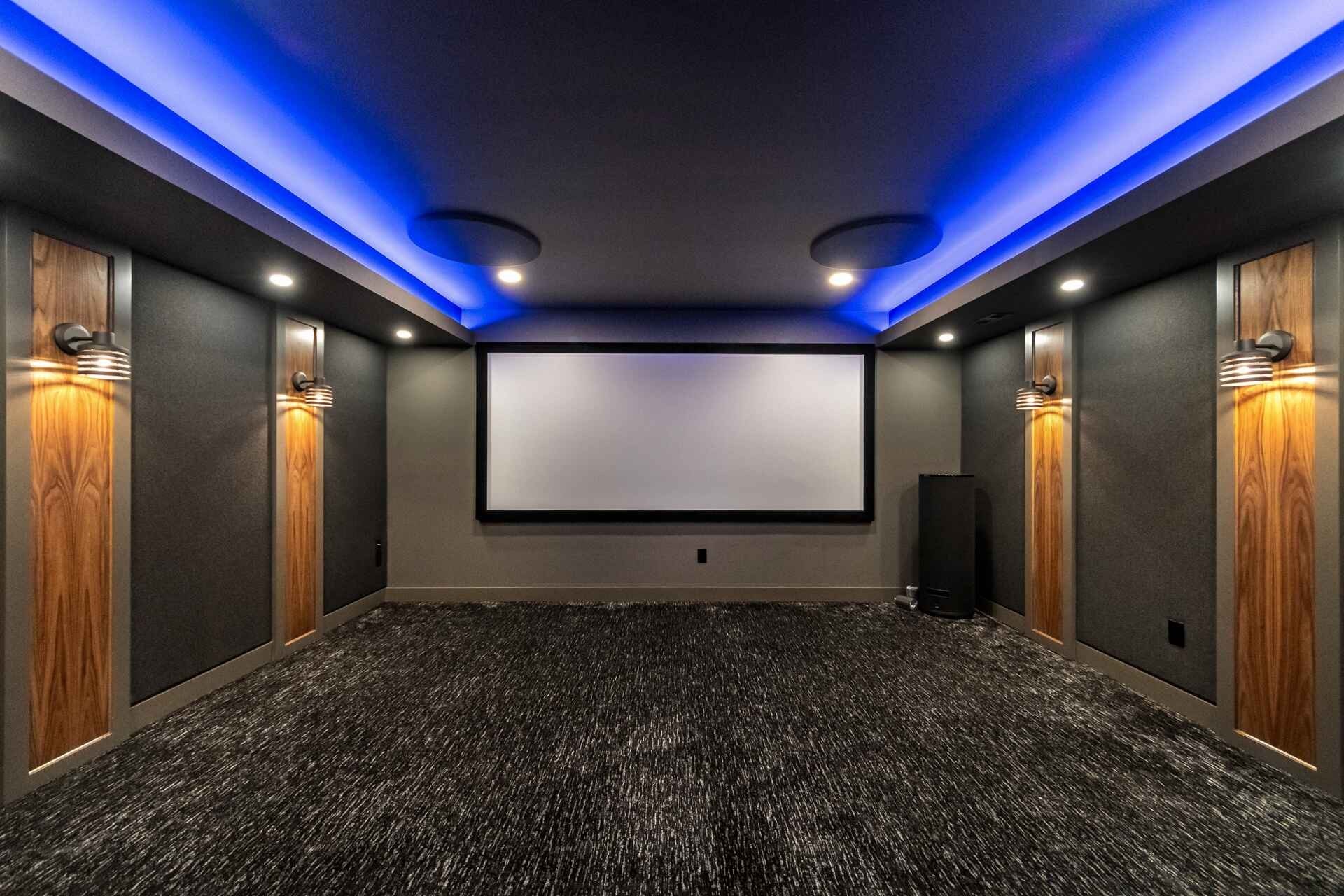
The $35,000-$100,000 Luxury Home Theater: Your Private Cinema

When we design luxury theaters for clients in McLean or Great Falls, we're not talking about a big TV and some surround sound speakers. These are dedicated cinema spaces with acoustically engineered rooms, reference-quality audio systems, and projectors that rival commercial theaters.

What makes a luxury home theater:

Laser Projection Systems ($10,000-$35,000)

Premium theaters use traditional lamp projectors requiring $300-$500 bulb replacements every few years. Luxury theaters invest in laser projection from JVC or Sony that runs maintenance-free for 20,000+ hours—that's watching a 2-hour movie every night for 27 years. These deliver deeper blacks, more accurate colors, and that cinematic "pop" you get at real theaters.

Acoustically Transparent Screens ($3,000-$8,000)

Professional theaters mount front speakers behind the screen exactly where dialogue should come from. Acoustically transparent screens use micro-perforation technology, allowing sound through while maintaining perfect 4K image quality. It's the difference between watching a movie and being transported into the story.

Reference-Quality Audio ($15,000-$45,000)

Luxury theaters run 7.2.4 up to 11.4.6 Dolby Atmos configurations using speakers from KEF, B&W, or Focal. But speakers are only half the equation. High-end processors like Trinnov Altitude—the same systems used in professional mastering studios—analyze every acoustic imperfection and correct it in real-time. The result is audio so clean and precise that you hear details you've never noticed in movies you've watched dozens of times.

Fortress Seating ($2,500-$5,000 per seat)

These aren't recliners with cup holders; they're handcrafted furniture pieces built in the USA with 10-year warranties. Every seat is custom-sized for your room and body. Premium leather that improves with age. Power-adjustable everything—headrests, lumbar support, and recline angles. SoundShaker bass transducers let you feel explosions through the seat. Heat and massage systems. Wireless charging pads. These seats take 10-12 weeks to build because they're made by hand, and they'll outlast any big-box recliner by decades.

Professional Acoustic Treatment ($8,000-$20,000)

Luxury theaters don't just have better equipment; they have better rooms. Professional acoustic treatment balances clarity with natural spaciousness. Bass traps control low-frequency rumble. Hybrid absorber-diffusers maintain clarity without making the room feel dead. The goal isn't to dampen everything; it's to create a clear, accurate, alive sound where you can place every instrument in an orchestra.

The Complete Package

Add layered lighting that dims gradually before showtime, starfield ceilings with twinkling fiber optics, dedicated HVAC running whisper-quiet, smart home integration controlling everything with a single button, and often a snack bar with popcorn machine and beverage refrigerators. Some clients even add separate HVAC zones, keeping theaters at a perfect 68°F regardless of what's happening in the rest of the basement.

Reality Check: A $75,000 dedicated theater seems insane until you realize what you're getting. But here's the truth: if you're watching Netflix comedies and reality TV, this makes zero sense. If you're a serious film enthusiast annoyed by people talking during movies, if you host regular movie nights, if you can tell the difference between streaming compression and properly mastered 4K discs, if you want your home to be the gathering place for friends and family, then a reference-quality theater transforms how you experience entertainment. Just make sure you actually love movies enough to justify it.

The $40,000-$150,000 Luxury Wine Cellar & Tasting Room: Your Private Vintage Sanctuary

When we design wine cellars for serious collectors in McLean or Potomac, we're not talking about a wine fridge in the corner. These are temperature-controlled, humidity-regulated environments with custom racking for 500-2,000+ bottles, glass-enclosed displays that rival Napa tasting rooms, and dedicated spaces where you can host tastings that make your wine-obsessed friends jealous.

What luxury wine cellars include:

Commercial-Grade Climate Control ($8,000-$20,000)

Your wine collection is only as good as the environment storing it. Luxury cellars require commercial-grade systems from WhisperKOOL or Wine Guardian maintaining precise 55-60°F temperatures and 60-70% humidity year-round. Split systems separate the noisy condenser from your cellar entirely. The evaporator stays inside while the condenser lives in a mechanical room, creating a vibration-free, whisper-quiet environment. Premium systems include liquid probe thermometers monitoring actual bottle temperature, sophisticated room correction, and remote monitoring via smartphone apps.

Custom Racking Systems ($12,000-$50,000)

This is where your cellar's personality emerges. Traditional wood racking in mahogany or walnut creates that Old World European aesthetic. Modern metal systems from VintageView offer label-forward displays where bottles float on walls like gallery art. Many luxury cellars combine both—wood for bulk storage, metal for statement walls displaying the best vintages. Custom configurations include individual bottle storage, case bins, presentation rows, specialized racks for magnums, and even motorized pull-down systems for accessing high storage. The racking isn't just storage—it's the architectural centerpiece.

Glass Enclosures ($8,000-$25,000)

Professional cellars showcase collections through frameless glass walls and doors from companies like MAIDEN Steel. These aren't standard sliding doors—they're architecturally sealed, insulated dual-pane systems maintaining perfect climate control while creating jaw-dropping visual impact. Many incorporate integrated LED lighting within glass frames or backlighting for dramatic effect. The goal is to make your collection living, breathing art that's visible from entertainment spaces while maintaining precise environmental control inside.

Proper Insulation & Vapor Barriers ($5,000-$12,000)

You can't see this work, but it determines whether your cellar actually functions. Proper cellars use closed-cell spray foam, creating R-19+ values on all six sides—walls, ceiling, and floor. Vapor barriers prevent moisture migration. Every penetration point gets sealed. Without pharmaceutical-grade environmental isolation, your $15,000 cooling system fights a losing battle.

The Tasting Room Experience ($15,000-$40,000)

Luxury cellars aren't just storage—they're destinations. Proper tasting areas include handcrafted tables made from wine barrel staves or reclaimed wood, upholstered seating in leather or rich fabrics, stemware storage with overhead racks protecting your Riedel collection, and wet bars with wine preservation systems like Coravin. Lighting design layers ambient, task, and accent illumination with dimmable LEDs for mood, pendant lights over tasting tables, and integrated lighting highlighting special bottles. Many add sound systems, smart home controls, and displays showing vineyard maps or tasting notes.

The Details That Matter

Luxury cellars incorporate stone or engineered wood flooring handling temperature fluctuations, walls in natural stone or custom millwork with integrated storage, barrel-vaulted ceilings adding drama, and digital inventory systems tracking every bottle's location and optimal drinking window. Some add separate temperature zones for Champagne storage, UV-free display lighting, specialized storage for verticals or horizontals, cigar humidors, or even biometric security.

Reality Check: A $100,000 wine cellar sounds absurd until you calculate what you're protecting. If you're seriously collecting—buying futures, investing in rare vintages, building a cellar that will appreciate over decades—proper storage isn't a luxury, it's a necessity. A $50,000 collection stored poorly becomes $10,000 of vinegar. But here's the truth: if you're buying $15 wines at Costco and finishing bottles within months, this makes zero sense. If you're hosting regular tastings, if your collection has reached the point where tracking becomes challenging, if you've stood in a Napa cellar and thought "I want this at home," then a luxury wine cellar transforms from indulgence to essential infrastructure. Just make sure you're actually drinking the wine, not just collecting it.

The $25,000-$75,000 Luxury Home Office: Your Private Executive Retreat

When McLean executives or Bethesda entrepreneurs build luxury home offices in their basements, they're not setting up a card table with a laptop. These are 200-400 square foot professional workspaces with custom millwork, ergonomic furniture, acoustic treatment that rivals recording studios, and technology integration that makes Fortune 500 conference rooms jealous.

What luxury home offices include:

Custom Millwork & Built-Ins ($15,000-$35,000)

This separates a home office from a dedicated professional environment. Floor-to-ceiling custom cabinetry in walnut, mahogany, or white oak provides organized storage while creating executive presence. Built-in desk systems with integrated cable management, hidden printer drawers, and pull-out filing cabinets keep everything accessible but concealed. Floor-to-ceiling bookshelves with integrated LED lighting, display niches for awards, and specialized storage complete the professional look. Some clients add hidden Murphy beds that fold seamlessly into cabinetry, transforming offices into guest rooms when needed.

Professional Furniture & Ergonomics ($5,000-$12,000)

If you're working from home seriously, your chair matters more than almost any other furniture purchase. Herman Miller Aeron chairs with PostureFit lumbar support or Steelcase Leap chairs with LiveBack technology. These are precision-engineered seating systems with 12-year warranties covering 24/7 use. Standing desks with programmable height presets and motorized adjustments. Dual-monitor or triple-monitor arms keep screens at perfect ergonomic heights. Executive leather seating areas for client meetings using actual furniture-quality pieces.

Acoustic Treatment & Soundproofing ($4,000-$10,000)

Professional acoustic panels from Primacoustic or Auralex treat echo and reverberation, creating broadcast-quality sound for video calls. These aren't foam squares—they're fabric-wrapped panels with NRC ratings of 0.75-0.95, absorbing 75-95% of sound energy. For offices near mechanical rooms, full soundproofing with decoupled walls and solid-core doors creates true isolation. The goal isn't silence—it's clarity, where your voice sounds natural on calls and outside noise stays outside.

Professional Technology Integration ($8,000-$20,000)

Motorized screens descending from ceiling housings for presentations. Retractable 4K video conferencing cameras with auto-framing. Professional microphone systems capture your voice clearly while rejecting keyboard noise. Hardwired Ethernet for reliability with enterprise-grade WiFi 6E providing gigabit wireless speeds. Multiple monitors connecting through Thunderbolt docks. Cable management is so obsessive that nothing is visible on desk surfaces. Smart home integration controls lighting, temperature, and motorized window shades from wall-mounted touch panels.

Lighting & Climate Control ($5,000-$12,000)

Layered lighting with recessed LEDs for ambient illumination, under-cabinet task lighting, and accent lighting highlighting architectural features. Color temperature control shifts from cooler 4000-5000K—promoting alertness during work hours—to warmer 2700-3000K for evening relaxation. Dedicated HVAC zones with individual thermostats maintaining 68-72°F. Proper dehumidification prevents that musty basement feeling. Fresh air circulation through dedicated ventilation or ERV systems.

The Complete Package

Add engineered hardwood flooring in rich finishes, textured wallcoverings or wood paneling, crown molding and wainscoting, dedicated espresso stations, hidden safes for important documents, wet bars with small sinks, gallery-quality artwork, and actual furniture beyond just desk and chair. Some add electric fireplaces for ambiance, humidors for clients who appreciate cigars, or display cases for collections. The space feels less like "home office" and more like "private executive suite."

Reality Check: A $50,000 basement office sounds absurd until you calculate what you're getting. If you're actually working from home full-time, if you're running a business, if you host client meetings, if your professional image matters, if you spend 8-10 hours daily at that desk, then investing in proper infrastructure makes perfect sense. But if you're checking email twice a day and taking occasional Zoom calls, if your "office" is really just a spot to pay bills, this is complete overkill. A $2,000 desk and a decent chair will serve you fine. If you're a consultant billing $300/hour, if your workspace impacts your productivity and professional presence, then a luxury home office transforms from indulgence to essential business infrastructure.

What Luxury Costs in Maryland and Northern Virginia

Here's where we get specific about pricing, because your final number depends on several factors beyond just square footage.

Important Note: If your home is in Washington DC proper, please visit our Historic Home Basement Remodeling page. DC projects require specialized approaches due to age, structure, and regulations that we cover separately. This guide focuses on Maryland and Northern Virginia suburbs.

Maryland and Northern Virginia: $150,000-$300,000 (1,000 sq ft)

Most luxury work happens in affluent suburbs—Bethesda, Potomac, McLean, Great Falls, North Arlington, and Alexandria. These areas share relatively straightforward permit processes and modern infrastructure we know inside out.

For a standard 1,000 square foot luxury basement:

Project Level Cost Range What's Included
Entry Luxury $150,000-$185,000
($150-$185/sq ft)
Core work + one major signature space + custom millwork in key areas + luxury finishes throughout
Full Luxury $185,000-$250,000
($185-$250/sq ft)
Core work + two major signature spaces + extensive custom millwork and built-ins + architectural lighting design
Ultra-Luxury $250,000-$300,000+
($250-$300+/sq ft)
Everything in Full Luxury + three or more signature spaces + exotic materials or one-of-a-kind features + extensive structural modifications

What Affects Your Specific Price?

You're starting ahead if your home has:

  • Good ceiling height (8+ feet)
  • Modern foundation (poured concrete, not stone or block)
  • Existing rough-ins for plumbing
  • Easy access for materials and equipment
  • Adequate HVAC capacity

Costs increase if you need:

  • Foundation repairs or extensive waterproofing
  • Structural modifications for open layouts
  • HVAC system expansion or upgrades
  • Electrical panel upgrades for increased capacity
  • Extensive moisture remediation

The difference usually comes down to how many signature spaces you're including and whether your home presents any structural challenges. Split-level homes from the 60s and 70s often need more extensive work than modern single-family homes from the 2000s. Older homes might require bringing things up to current code standards, which adds cost but ensures everything's safe and legal.

Timeline: When Will Your Luxury Basement Be Ready?

Timeline: 12-20 weeks for a 1,000 sq ft luxury basement in Maryland and Northern Virginia suburbs

Here's the reality about luxury basement timelines: if someone promises luxury results in 8-10 weeks, they're either lying or they don't understand what luxury actually means. Quality craftsmanship, custom fabrication, and specialty equipment take time.

Standard Luxury Projects: 12-16 Weeks

  • Weeks 1-2: Design finalization and premium material procurement
  • Weeks 3-4: Demolition and structural work
  • Weeks 5-8: Framing, mechanicals, and infrastructure
  • Weeks 9-12: Premium finishes and custom installations
  • Weeks 13-16: Specialty equipment, technology integration, final details

What Can Add Time

  • Foundation or structural issues discovered during demolition (add 2-4 weeks)
  • Custom materials with long lead times—millwork, specialty glass, exotic stone (add 4-8 weeks)
  • Permit delays in certain jurisdictions (add 2-4 weeks)
  • Multiple signature spaces requiring specialized contractors (add 2-4 weeks)
  • Weather-related delays for exterior work like egress windows (add 1-2 weeks)

Planning Tip: Plan for 16-20 weeks and hope for 12-14. Build in buffer time for the inevitable surprises that occur when working on existing homes. Custom millwork alone can take 8-12 weeks to fabricate. Fortress theater seating takes 10-12 weeks. Wine cellar cooling systems may have 6-8 week lead times. Factor this into your timeline expectations.

Luxury Solutions Built Around Real Lifestyles

After 1,000+ basement projects across Maryland and Northern Virginia over 20 years, we've noticed patterns in how affluent families actually use their luxury basements. Let's walk through three common scenarios:

The Serious Wine Collector & Entertainer ($185,000-$250,000)

Your Challenge: You've got a $75,000+ wine collection scattered across inadequate storage, you host regular dinner parties in McLean or Potomac, and you want a space that rivals Napa tasting rooms while protecting your investment.

What luxury delivers:

  • Climate-controlled wine cellar with custom racking for 800-1,200 bottles ($55,000-$85,000)
  • Glass-enclosed display with frameless doors showcasing your collection
  • Dedicated tasting room with custom table, upholstered seating, and wet bar area
  • Luxury wet bar with wine fridge, ice maker, and custom cabinetry ($35,000-$45,000)
  • Open entertainment area with premium flooring and architectural lighting
  • Full bathroom with luxury finishes, so guests aren't traipsing upstairs
  • Smart home integration controlling lighting, temperature, and music throughout

This is where luxury makes perfect sense. You're protecting a serious investment while creating a destination space that transforms how you entertain.

The Committed Fitness Enthusiast ($175,000-$225,000)

Your Challenge: You're spending $300-$500 monthly on gym memberships, personal training, massage therapy, and recovery treatments in Bethesda or Arlington. You want to work out on your schedule without fighting traffic or waiting for equipment.

What luxury delivers:

  • 400-500 sq ft wellness center with commercial-grade equipment ($30,000-$45,000)
  • Professional rubber flooring systems handling Olympic lifts plus dedicated turf sections
  • Woodway treadmill, Assault bike, Concept2 rower, Tonal system, power rack, full dumbbell set
  • Recovery suite with steam shower, infrared sauna, and cold plunge ($20,000-$35,000)
  • Dedicated HVAC zone maintaining 65-68°F in workout areas
  • Floor-to-ceiling mirrors, professional audio/visual, and smart lighting
  • Spa bathroom with heated floors and luxury finishes
  • Separate lounge area for stretching and recovery

Calculate what your family spends annually on fitness memberships, training, and recovery treatments. For many McLean and Chevy Chase families, a wellness center pays for itself in 4-5 years while adding significant resale value. But only if you're actually committed to using it 4-5 days per week.

The Film Buff & Serious Host ($200,000-$275,000)

Your Challenge: You're a serious film enthusiast in Great Falls or North Arlington who can tell the difference between streaming compression and properly mastered 4K discs. You want a theater that rivals commercial cinemas and a space where friends actually want to gather.

What luxury delivers:

  • Dedicated home theater with laser projection and reference audio ($60,000-$85,000)
  • JVC laser projector, acoustically transparent screen, 9.2.4 Dolby Atmos system
  • Fortress Seating (5-7 custom handcrafted seats)
  • Professional acoustic treatment with proper soundproofing
  • Starfield ceiling, layered lighting, dedicated HVAC zone
  • Luxury wet bar with kegerator, wine fridge, and custom cabinetry ($40,000-$55,000)
  • Theater lobby area with snack bar and popcorn machine
  • Full bathroom with luxury finishes
  • Control4 smart home integration managing the entire basement

This is the setup where friends text asking when the next movie night is, where your home becomes the gathering place, where you're watching films the way directors intended them to be experienced. But only if you're actually passionate enough about cinema to justify the investment.

When Luxury Makes Sense vs. When It Doesn't

We've learned that luxury finishing succeeds when it solves real problems and fails when it's about impressing neighbors. Let's be direct about when luxury makes sense and when it's a waste of money.

Luxury Makes Sense When:

  • You'll actually use it regularly: Working out 4+ days weekly, watching movies 2-3 times per week, hosting tastings monthly—luxury pays off when it transforms your daily routine
  • You're replacing expensive services: $500/month in gym memberships plus personal training adds up. A home wellness center pays for itself in 5 years while adding resale value
  • You have serious collections to protect: A $75,000+ wine collection needs proper climate-controlled storage. A wine cellar protects your investment
  • Your home is your entertainment hub: If you host regularly and your home is where friends gather, luxury spaces that rival commercial establishments make perfect sense
  • You work from home full-time: If you're billing $300+/hour and meeting with clients, a professional executive office isn't a luxury—it's business infrastructure
  • Space limitations require efficiency: When you can't expand outward, going luxury in your basement maximizes what you have
  • You're genuinely passionate: Film buffs who understand reference-quality audio, fitness enthusiasts who can explain progressive overload, wine collectors who know their verticals from horizontals—passion justifies luxury

Luxury Doesn't Make Sense When:

  • You're trying to impress people: If it's about Instagram or showing off to neighbors, you're wasting money. Luxury should serve you, not impress others
  • Usage won't justify the cost: A $75,000 theater you'll use twice monthly, a $50,000 gym you'll visit twice weekly—the math doesn't work
  • You're not actually passionate: If you can't tell the difference between streaming and 4K discs, if your "wine collection" is $15 Costco bottles, if your workout routine is walking the dog—luxury is overkill
  • Your home value won't support it: A $250,000 luxury basement in a $600,000 home creates pricing problems when selling
  • You're planning to sell soon: Luxury ROI requires finding buyers who value exactly what you built. If you're selling in 2-3 years, stick with premium
  • Premium would serve you fine: A $25,000 premium wet bar hosts parties beautifully. A $60,000 luxury version better serves daily life, not just occasional gatherings
  • Your budget is stretched: If $200,000 requires financing that stresses your budget, luxury isn't the right choice. Do premium well instead of luxury poorly

The Honest Question: Will this space genuinely improve your daily life for the next 10-20 years, or is it something that sounds impressive but won't actually get used? Answer that honestly before investing luxury-level money.

What's the ROI on Luxury Basement Finishing?

Let's be honest about ROI, because luxury basements require a different way of thinking about return on investment.

According to Remodeling Magazine's 2025 Cost vs. Value report, standard basement finishing returns 71% nationally. Here in the DC metro area, we see 75%+ ROI on premium basement finishing because of high demand, limited inventory, and strong property values.

But luxury finishing changes the equation. To recoup 70% of a $225,000 luxury investment, you need to find a buyer who values those exact features the same way you do. That's a much smaller buyer pool.

The Financial Reality:

  • A $75,000 reference-quality theater adds maybe $40,000-$50,000 to resale value
  • A $80,000 wine cellar adds $50,000-$60,000 if buyers collect wine, nothing if they don't
  • A $40,000 wellness center adds $25,000-$30,000 to active buyers, less to others

This doesn't mean luxury is a bad investment. It means you need to think about ROI differently.

The Real ROI Is:

  • Watching your teenage daughter choose your home theater over going out with friends every Friday night
  • Hosting dinner parties where guests linger in your wine cellar until midnight, making memories you'll talk about for years
  • Working out in your gym every morning instead of hitting snooze because you dread the commute to your commercial gym
  • Running your business from a professional office where clients are impressed and you're genuinely productive
  • Realizing you haven't been to a commercial theater in two years because your home setup is better
  • Calculating that your wellness center saved you $48,000 in memberships, training, and recovery treatments over four years
  • Not having to move to a bigger house because you maximized the space you have

The question isn't "what's the financial ROI?" The question is "will this genuinely improve my daily life for the next 10-20 years?"

Why Working with a Luxury Basement Specialist Matters

Luxury basement finishing fails when general contractors treat it like any other remodel.

The difference between premium and luxury isn't just expensive materials—it's the expertise to integrate commercial-grade systems, coordinate custom fabrication timelines, and manage the dozens of specialty contractors required for signature spaces.

What a luxury specialist brings:

  • Experience with commercial equipment: We've installed dozens of wine cellar cooling systems, laser projectors, commercial gym equipment, and smart home systems. We know what works and what doesn't
  • Established relationships: Our network inc

We are here to help!

Thank you! Your message has been received!

Ask a question
By clicking submit you agree to our terms and conditions.

Thank you! You will receive your quote within minutes!

Get online quote
How did you find us?
By clicking submit you agree to our terms and conditions.

Thank you! Your quote has been submitted successfully!

Finish your quote

Book your in-home consultation
Unfortunately, this zip code is outside of our service area. We appologize for any inconvenience.
What We DON'T Do!
checkmark
Pressure you to sign anything
checkmark
Get upset if you need time to think
checkmark
Make you decide that day
checkmark
Call you repeatedly if you say no
SIGN IN

Don't have an account yet?

Sign up